
Why Does My Cat Pee on My Bed?
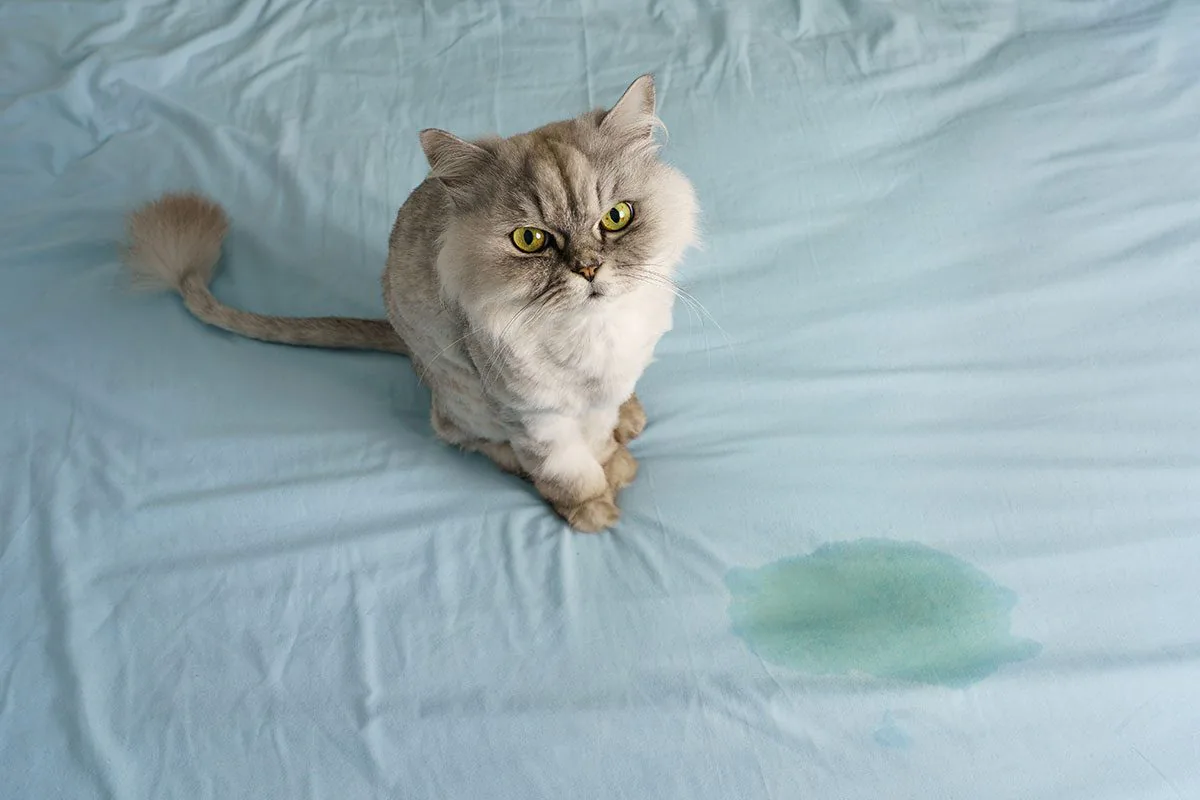
If you’re asking, “Why does my cat pee on my bed?” the answer often comes down to stress, medical concerns, or litter box issues. When a cat pees on the bed, it signals that something in their environment, health, or routine has changed. Cats rely on scent and routine to feel secure, so your bed—rich with your scent—can become a target when they feel unsettled. While frustrating, a cat peeing on the bed is their way of communicating that they need attention and support.
Medical Reasons Behind Cat Peeing on the Bed
Before assuming a behavioral issue, it’s always important to evaluate your cat’s health. Many cases of a cat peeing on the bed stem from underlying medical conditions that cause discomfort or urgency. Cats often associate the litter box with pain if they feel unwell, which leads them to seek out softer, familiar surfaces like bedding.
Urinary tract infections, bladder inflammation, and kidney disease frequently cause inappropriate urination. These conditions increase urgency and discomfort, making it difficult for your cat to reach or use the litter box consistently. In some cases, your cat may not be able to hold urine long enough to get there.
Other health concerns, including arthritis or mobility issues, can also contribute. If climbing into a litter box becomes painful, your cat may choose an easier, more accessible location. Older cats face this challenge more often, but it can affect cats of any age.
If your cat pees on the bed suddenly or shows additional signs like straining, frequent attempts to urinate, or vocalizing, schedule a veterinary visit right away. Early evaluation helps identify the cause and guide next steps.
Behavioral and Emotional Triggers
When medical issues are ruled out, consider your cat’s emotional state. Cats are highly sensitive to change, and even small disruptions can trigger a cat peeing on the bed. Because your bed carries your scent, your cat may use it as a place to self-soothe.
Common stress-related triggers include: changes in routine, new pets, visitors, or moving to a new home. Even rearranging furniture or introducing new scents can affect your cat’s sense of security. In multi-cat households, tension between cats can also lead to marking behaviors.
Some cats develop anxiety that leads to inappropriate urination. This behavior is not spiteful. Instead, it reflects your cat’s attempt to cope with stress or uncertainty. Identifying and addressing these triggers is an important step in resolving the issue.
Litter Box Setup Problems
A cat that avoids the litter box often communicates dissatisfaction with its setup. When a cat pees on the bed, evaluate whether the litter box meets their needs. Even small issues can make the box unappealing.
Cats prefer clean, quiet, and easily accessible litter boxes. If the box is dirty, placed in a high-traffic area, or difficult to reach, your cat may look for alternatives. The type of litter also matters. Strong fragrances or uncomfortable textures can discourage use.
Evaluate these common litter box concerns:
- The box is not cleaned frequently enough
- The location feels noisy or stressful
- There are not enough boxes in a multi-cat home
- The box is too small or has high sides
- The litter texture or scent is not preferred
Adjusting these factors often improves litter box use and reduces accidents on the bed.
Why Does My Cat Pee on My Dog’s Bed?
You may also notice your cat peeing on your dog’s bed, which raises similar concerns. This behavior often relates to scent and territory. Your cat may feel the need to mix or override the dog’s scent with their own, especially if they feel uncertain or threatened.
Shared spaces between pets can increase tension, even if interactions seem calm. Your cat may choose the dog’s bed because it represents a high-scent area where they can re-establish comfort. In some cases, this behavior reflects competition for resources or attention.
Evaluate your household dynamics if your cat pees on the bed or your dog’s bedding. Providing separate resting spaces and reducing stress between pets can help restore balance.
Environmental Factors That Contribute to a Cat Peeing on the Bed
Your home environment plays a significant role in your cat’s behavior. Cats thrive on consistency, and disruptions can lead to unwanted habits. When a cat pees on the bed, assess whether recent changes may have triggered the behavior.
Consider recent shifts such as travel, schedule changes, or new household members. Even subtle differences, like new cleaning products or scents, can affect your cat. Cats rely heavily on smell, so unfamiliar odors may lead them to re-mark familiar spaces like your bed.
Noise levels also matter. Loud environments or frequent disturbances near the litter box can discourage use. Creating a calm, predictable space helps your cat feel secure and reduces the likelihood of accidents.
When to Call Your Veterinarian
If your cat suddenly starts peeing on the bed, schedule an evaluation with your veterinarian. Early intervention helps prevent the behavior from becoming a habit and allows your team to identify any underlying concerns.
Contact your veterinarian if you notice:
- Sudden changes in urination habits
- Frequent attempts to urinate with little output
- Signs of discomfort or vocalization
- Blood in the urine
- Increased thirst or appetite changes
These signs may indicate a medical issue that requires prompt attention. Even if your cat appears otherwise normal, ongoing accidents warrant a professional assessment.
What to Expect During a Veterinary Visit
During the visit, your veterinary team will take a thorough approach to understand why your cat pees on the bed. They will review your cat’s history, behavior, and environment to identify contributing factors. A physical exam helps to evaluate overall health and detect signs of discomfort.
Your team may recommend diagnostic testing to better understand your cat’s condition. This information allows them to determine whether a medical issue, behavioral concern, or combination of factors is involved.
Your veterinarian’s goal is to help you resolve the issue while supporting your cat’s comfort and well-being. With the right approach, many cats return to consistent litter box use.
Let’s Help Your Cat Get Back on Track
If your cat is peeing on the bed, you don’t have to navigate it alone. Our team at Schertz Animal Hospital in Schertz, TX, is here to help you understand what’s happening and guide your next steps. Call us at (210) 659-0345 or request an appointment online to get started.
Recent Posts
About Us
We know that choosing the right veterinarian for your pet (and you) can be a challenge. Yet, with our stress-free handling, our long-term, experienced staff, and a state-of-the-art facility, we make the decision an easy one!