
Dog Hot Spot vs Ringworm: How to Tell the Difference
The main difference in the dog hot spot vs ringworm question comes down to cause and appearance: hot spots are moist, red, painful patches caused by bacterial infection and constant licking, while ringworm is a contagious fungal infection that typically creates dry, scaly, circular areas of hair loss. Both conditions can look alarming, and both deserve a veterinary exam, but they behave very differently. Hot spots tend to appear suddenly and grow within hours. Ringworm usually develops slowly and can spread to other pets and even people in your household. Because the two can resemble each other in the early stages, many pet owners aren’t sure which one they’re dealing with. At Schertz Animal Hospital, we see both skin problems regularly in dogs from Schertz and the surrounding area. This guide walks through what each condition looks like, how to compare a dog hot spot vs ringworm, and how a veterinarian confirms the diagnosis.
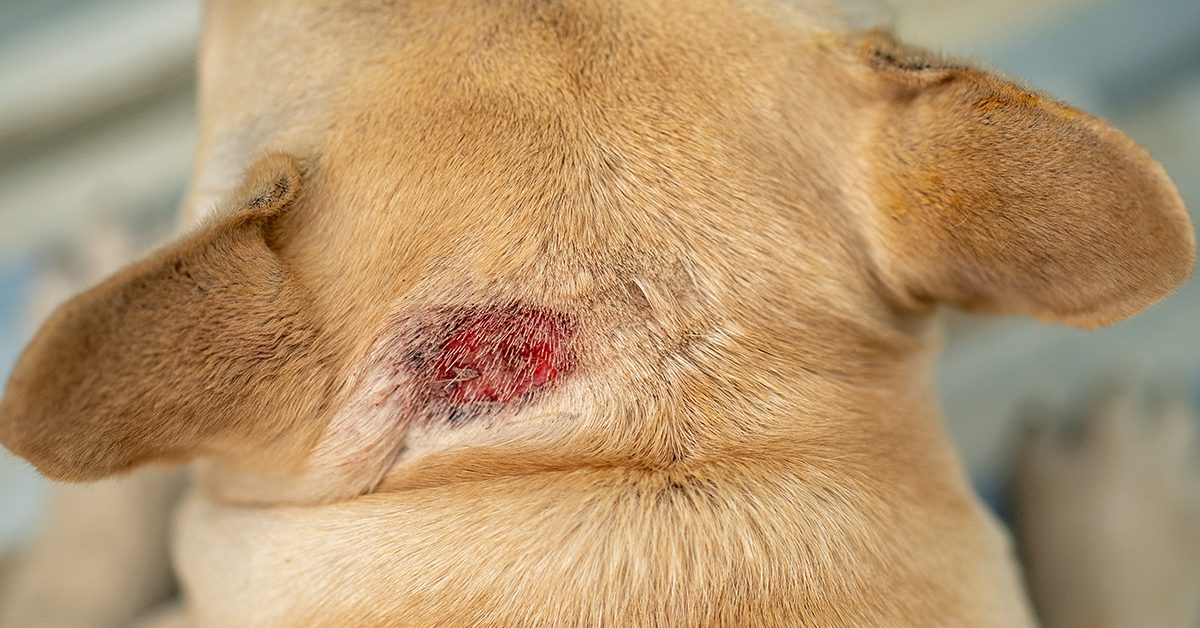
What Does a Hot Spot Look Like on a Dog?
Hot spots, known medically as acute moist dermatitis, are one of the most common skin complaints in dogs. Recognizing their features is the first step in sorting out a dog hot spot vs ringworm concern.
Typical Appearance
A hot spot usually starts as a small red area that your dog licks, chews, or scratches obsessively. Within a day, it can expand into a raw, inflamed patch several inches wide. The surface often looks wet or shiny and may ooze fluid or pus. Hair around the area becomes matted, and a crust can form over the top. Many owners describe the spot as warm to the touch, which is how the condition earned its name. That warmth and moisture are early clues when weighing a dog hot spot vs ringworm situation. Hot spots are also quite painful, so your dog may flinch, growl, or pull away when you get close.
What Triggers Hot Spots?
Hot spots almost always start with something that makes a dog itch. The resulting cycle of licking and scratching damages the skin and allows bacteria to take hold. Frequent triggers include:
- Flea bites and flea allergy dermatitis
- Seasonal or food allergies
- A thick undercoat that traps heat and moisture
- Skin that stays damp after swimming or bathing
- Boredom, stress, or anxiety that leads to excessive licking
- Ear infections or anal gland discomfort that prompt scratching nearby
In South Texas, long flea seasons and humid summers make hot spots especially common in breeds like Golden Retrievers, German Shepherds, and Labrador Retrievers.
What Are the Signs of Ringworm in Dogs?
Despite its name, ringworm has nothing to do with worms. It’s a fungal infection of the skin, hair, and nails caused by organisms called dermatophytes, most often Microsporum canis.
How Ringworm Shows Up on the Skin
Ringworm lesions tend to look drier and more defined than hot spots. When comparing a dog hot spot vs ringworm, look for these ringworm characteristics:
- Round or irregular patches of hair loss, often on the face, ears, paws, or tail
- Gray, scaly, or flaky skin within the bald area
- Broken, brittle hairs around the edges of the patch
- A reddened ring at the border with a clearer center in some cases
- Rough, crumbly, or misshapen nails when the claws are involved
- Mild itching, or sometimes none at all
Who Is Most at Risk?
Puppies, senior dogs, and pets with weakened immune systems face the highest risk. Dogs that spend time in shelters, boarding facilities, or homes with cats are also more likely to encounter the fungus. Ringworm spores are hardy and can survive in bedding, brushes, carpets, and soil for many months, which helps explain why the infection can keep circulating in multi-pet homes. This staying power is one more reason the dog hot spot vs ringworm distinction matters for the whole household.
A Note About Your Family
Ringworm is zoonotic, meaning it can pass from pets to people. Children, older adults, and anyone with a compromised immune system should be especially aware. If a family member develops an itchy, circular rash, they should contact their own physician.
Dog Hot Spot vs Ringworm: Spotting the Key Differences
Side by side, these two skin problems have several telltale distinctions. Keeping them in mind can help you describe what you’re seeing when you call your veterinarian.
Speed and Texture
Hot spots develop fast, sometimes appearing overnight and doubling in size within hours. They feel moist, warm, and sore. Ringworm, by contrast, often takes days or weeks to become noticeable, and the patches stay dry, dull, and scaly. If the area is wet and weeping, a hot spot is the more likely culprit. If it looks dusty and flaky, ringworm moves higher on the list. Texture alone won’t settle every dog hot spot vs ringworm case, but it offers a helpful starting point.
Itch and Pain Levels
Dogs with hot spots are usually miserable and fixated on the area. With ringworm, many dogs barely seem to notice the lesions at all. This difference in discomfort is one of the more useful clues in the dog hot spot vs ringworm comparison.
Contagiousness and Location
Hot spots aren’t contagious to people or other animals, and they often appear on the hips, neck, cheeks, or base of the tail. Ringworm spreads through direct contact and contaminated objects, and it frequently shows up on the head, ears, and legs. If another pet or a person in your household develops similar spots, that pattern points strongly toward ringworm.
Keep in mind that other conditions, including mange, allergic dermatitis, and bacterial skin infections, can mimic both. Visual clues help, but they can’t replace a professional diagnosis.
How Do You Know If Your Dog Has Ringworm?
The only reliable way to confirm ringworm is through veterinary testing. Looks alone can be deceiving, even for experienced pet owners, so a diagnostic visit settles the dog hot spot vs ringworm question with confidence.
Diagnostic Tools Your Veterinarian May Use
During an appointment at Schertz Animal Hospital, your veterinarian starts with a full physical exam and a close look at the affected skin. From there, testing may include a Wood’s lamp exam, which uses ultraviolet light to make some ringworm strains glow a yellow-green color. Because not every strain fluoresces, your veterinarian may also pluck a few hairs for microscopic evaluation. A fungal culture is considered the most definitive test, though results can take up to two weeks. Some clinics also offer PCR testing, which detects fungal DNA and often returns results faster. Your veterinarian will recommend the combination of tests that best fits your dog’s history and symptoms.
Ruling Out Other Conditions
If the exam points toward a hot spot instead, your veterinarian may perform skin cytology to look for bacteria or yeast and check for fleas, mites, or allergies that could be driving the itch. Identifying the underlying trigger matters, since hot spots tend to return when the root cause goes unaddressed. Testing for both possibilities removes the guesswork from the dog hot spot vs ringworm decision.
Why Early Testing Helps
A prompt diagnosis lets your veterinary team recommend the right care for your dog’s specific condition. For ringworm, it also gives your household time to limit spread to other pets and family members. For hot spots, it means faster comfort for a dog that may be in real pain. Either way, getting a clear answer on dog hot spot vs ringworm early saves time, stress, and repeat visits.
Get Answers About Your Dog’s Skin in Schertz, TX
Red, bald, or irritated patches on your dog’s skin can have many causes, and guessing often delays relief. Understanding the dog hot spot vs ringworm differences, such as moist versus dry texture, rapid versus slow growth, and intense versus mild itch, helps you notice changes early and describe them clearly. When in doubt, a quick exam is the best next step. The team at Schertz Animal Hospital provides skin evaluations, diagnostic testing, and personalized care plans for dogs throughout Schertz, Cibolo, Selma, Garden Ridge, and nearby communities. If you’ve spotted a suspicious patch on your pet, call us at (210) 659-0345 to schedule an appointment. We’ll help you find out what’s going on and get your dog back to comfortable, healthy skin.
Recent Posts
About Us
We know that choosing the right veterinarian for your pet (and you) can be a challenge. Yet, with our stress-free handling, our long-term, experienced staff, and a state-of-the-art facility, we make the decision an easy one!